
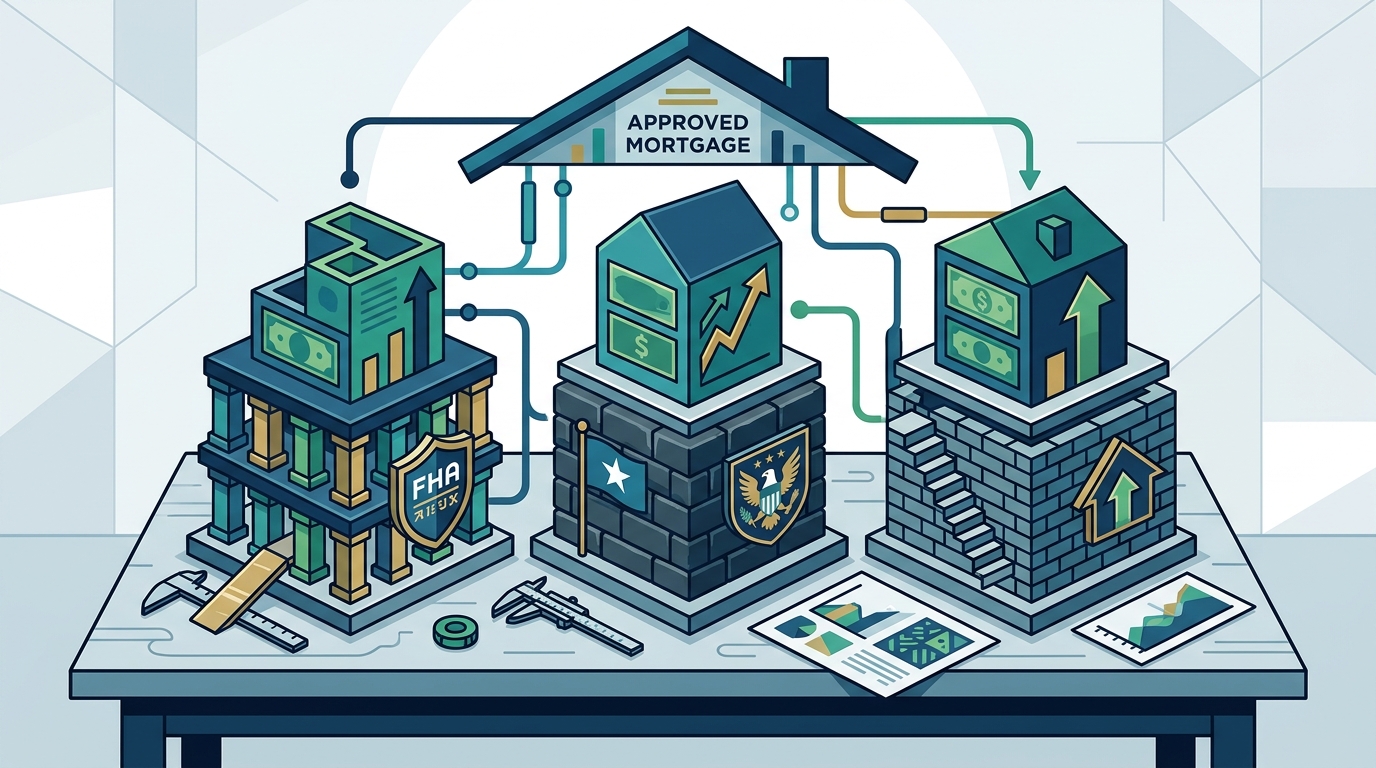
Choosing the right mortgage program is the single most critical financial decision you will make when purchasing a home. According to recent housing market data, the average interest rate for a 30-year fixed mortgage fluctuates significantly based on the loan type, directly impacting your total lifetime cost by tens of thousands of dollars. Understanding the structural differences between Federal Housing Administration (FHA), Veterans Affairs (VA), and conventional loans is essential for securing the best possible rate and minimizing upfront expenses. This guide breaks down the eligibility requirements, down payment obligations, and long-term financial implications of each option to help you make an informed decision.
Understanding Conventional Loans
A conventional loan is a mortgage that is not insured or guaranteed by the federal government. These loans are the most common choice for borrowers with strong credit profiles and substantial savings. Conventional loans offer flexibility in terms of property types, including single-family homes, condos, and multi-unit properties. They are often preferred by borrowers who want to avoid the stricter property condition requirements associated with government-backed loans.
Down Payment and Mortgage Insurance
One of the primary advantages of a conventional loan is the ability to put down as little as 3% for first-time homebuyers in many cases. However, if your down payment is less than 20% of the home's purchase price, you will be required to pay Private Mortgage Insurance (PMI). PMI protects the lender in case you default on the loan. Unlike FHA loans, where mortgage insurance can last for the life of the loan under certain conditions, conventional PMI can be removed once you reach 20% equity in your home. This feature makes conventional loans more cost-effective over the long term for borrowers who plan to stay in their home for several years.
Credit Score Requirements
Lenders typically require a minimum credit score of 620 for conventional loans. However, to secure the most competitive interest rates, a score of 740 or higher is ideal. Borrowers with lower credit scores may still qualify but will face higher interest rates and stricter debt-to-income (DTI) ratio requirements. It is important to note that credit score requirements can vary by lender and loan program. For detailed guidance on improving your credit profile before applying, review our comprehensive guide on how to improve your credit score.
FHA Loan Benefits and Requirements
FHA loans are insured by the Federal Housing Administration and are designed to help borrowers who may not qualify for conventional financing. These loans are particularly popular among first-time homebuyers and those with lower credit scores or limited savings for a down payment. The primary benefit of an FHA loan is its accessibility, allowing individuals to purchase a home with a down payment as low as 3.5%.
Eligibility and Credit Flexibility
FHA loans are more forgiving of lower credit scores compared to conventional loans. Borrowers with credit scores as low as 580 can qualify for the 3.5% down payment option. Those with scores between 500 and 579 may still qualify but will need to put down 10%. This flexibility makes FHA loans an excellent option for borrowers who have experienced past financial difficulties, such as bankruptcy or foreclosure, as they can often qualify for an FHA loan sooner than they would for a conventional loan.
Mortgage Insurance Premiums (MIP)
The trade-off for easier qualification is the cost of Mortgage Insurance Premiums (MIP). FHA loans require an upfront MIP, which is typically financed into the loan amount, as well as an annual MIP paid monthly. Unlike conventional PMI, FHA annual MIP generally lasts for the entire life of the loan if the down payment is less than 10%. If you put down 10% or more, the MIP can be removed after 11 years. This long-term insurance cost can make FHA loans more expensive over time compared to conventional loans for borrowers who can afford a larger down payment.
VA Loan Eligibility and Perks
VA loans are guaranteed by the Department of Veterans Affairs and are available to eligible veterans, active-duty service members, and surviving spouses. These loans offer some of the most favorable terms in the mortgage industry, including the possibility of zero down payment and no mortgage insurance. VA loans are a powerful tool for building wealth and achieving homeownership for those who have served their country.
No Down Payment and No PMI
The most significant advantage of a VA loan is the ability to finance 100% of the home's value without a down payment. Additionally, VA loans do not require mortgage insurance, which can save borrowers hundreds of dollars per month. Instead, VA loans charge a one-time funding fee, which can be financed into the loan. This fee varies based on the borrower's military service category, down payment amount (if any), and whether it is a first or subsequent use of the VA loan benefit.
Flexible Credit and Income Requirements
While the VA does not set a minimum credit score, most lenders require a score of at least 580 to 620. VA loans also allow for higher debt-to-income ratios compared to conventional loans, making them accessible to borrowers with existing debt obligations. However, lenders will still assess your ability to repay the loan based on your income, assets, and credit history. If you are a veteran or service member, exploring VA loan options with Christine Cox can help you understand your specific eligibility and benefits.
Side-by-Side Comparison
To help you visualize the differences between these three major loan types, the table below summarizes the key features, requirements, and costs associated with each option. This comparison is based on standard industry practices and may vary by lender and individual financial circumstances.
| Feature | Conventional Loan | FHA Loan | VA Loan |
|---|---|---|---|
| Minimum Down Payment | 3% (first-time buyers) | 3.5% (credit score 580+) | 0% |
| Minimum Credit Score | 620 (typical) | 580 (for 3.5% down) | 580-620 (lender dependent) |
| Mortgage Insurance | PMI (removable at 20% equity) | Upfront MIP + Annual MIP (often lifelong) | No PMI; One-time Funding Fee |
| Eligibility | General public | General public | Veterans, Active Duty, Surviving Spouses |
| Property Requirements | Standard | Must meet FHA appraisal standards | Must meet VA appraisal standards |
Key Takeaways
- Conventional Loans offer the best long-term value for borrowers with strong credit and the ability to put down at least 5-10%, as PMI can be removed.
- FHA Loans are ideal for first-time homebuyers with lower credit scores (580+) and limited savings, requiring a 3.5% down payment.
- VA Loans provide zero down payment and no mortgage insurance for eligible military personnel, making them the most cost-effective option for qualified borrowers.
- Credit Score Impact is significant across all loan types; improving your score before applying can lead to substantial interest rate savings.
- Debt-to-Income Ratio limits vary by loan type, with VA and FHA loans often allowing higher DTI ratios than conventional loans.
- Pre-approval is a critical step in the home buying process, providing a clear understanding of your budget and strengthening your offer.
- Christine Cox serves borrowers in Alabama, Florida, and Texas, offering personalized guidance on all major loan programs.
Frequently Asked Questions
Which loan has the lowest down payment requirement?
VA loans require zero down payment for eligible borrowers. FHA loans require a minimum of 3.5% for those with a credit score of 580 or higher. Conventional loans can start at 3% for first-time homebuyers.
Can I refinance an FHA loan into a conventional loan?
Yes, you can refinance an FHA loan into a conventional loan once you have built sufficient equity and improved your credit score. This can help you eliminate the lifelong mortgage insurance premium associated with FHA loans.
What is the difference between PMI and MIP?
PMI (Private Mortgage Insurance) is required for conventional loans with less than 20% down and can be removed once you reach 20% equity. MIP (Mortgage Insurance Premium) is required for FHA loans and typically lasts for the life of the loan if the down payment is less than 10%.
How do I check my VA loan eligibility?
You can check your VA loan eligibility by obtaining a Certificate of Eligibility (COE) from the Department of Veterans Affairs. Christine Cox can assist you in understanding your specific benefits and how to apply.
What documents do I need to apply for a mortgage?
Typically, you will need government-issued photo ID, pay stubs for the last 30 days, W-2s and tax returns for the last two years, and bank statements for the last two months. For self-employed borrowers, business returns and profit-and-loss statements are also required. Review our document checklist for a complete list.
How long does the mortgage pre-approval process take?
Pre-approval can often be completed within a few days, depending on the speed of document submission and verification. Christine Cox reviews applications personally to provide pre-approval letters quickly, helping you make offers with confidence.
Contact Your Loan Officer
Choosing the right mortgage program is a personal decision that depends on your unique financial situation, credit history, and long-term goals. Whether you are a first-time homebuyer exploring FHA options, a veteran leveraging your VA benefits, or a borrower with strong credit considering a conventional loan, expert guidance is essential. Christine Cox, Senior Loan Officer at NEXA Lending, provides direct, personalized service to help you navigate the complexities of home financing.
Start your journey today by applying for a mortgage online or contacting Christine Cox directly to schedule a consultation. With over a decade of experience in the mortgage industry, Christine is committed to helping you achieve your homeownership dreams with clarity and confidence.